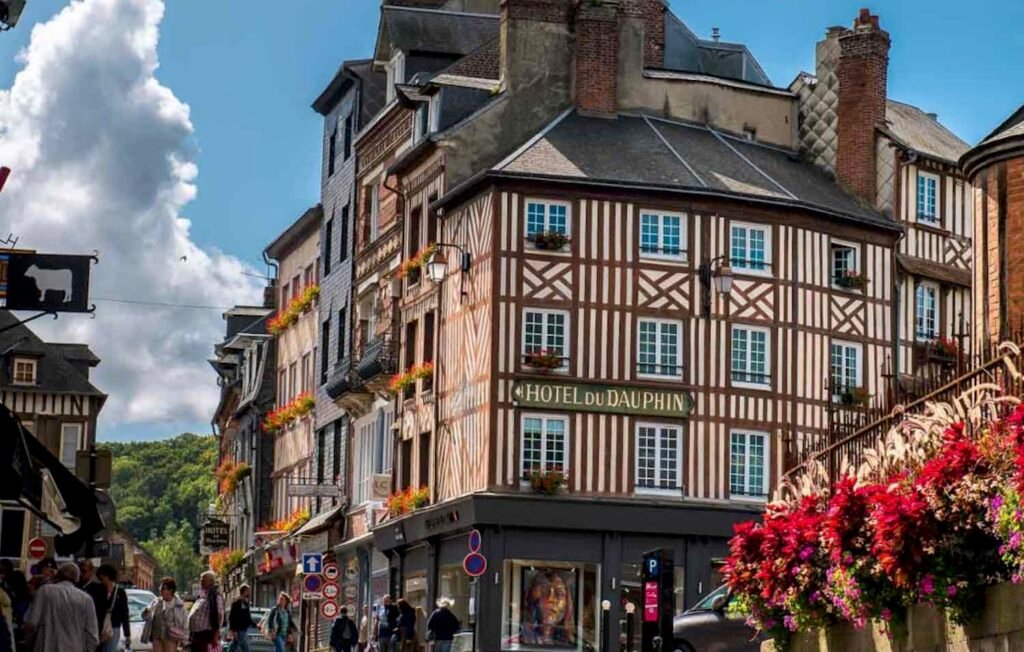




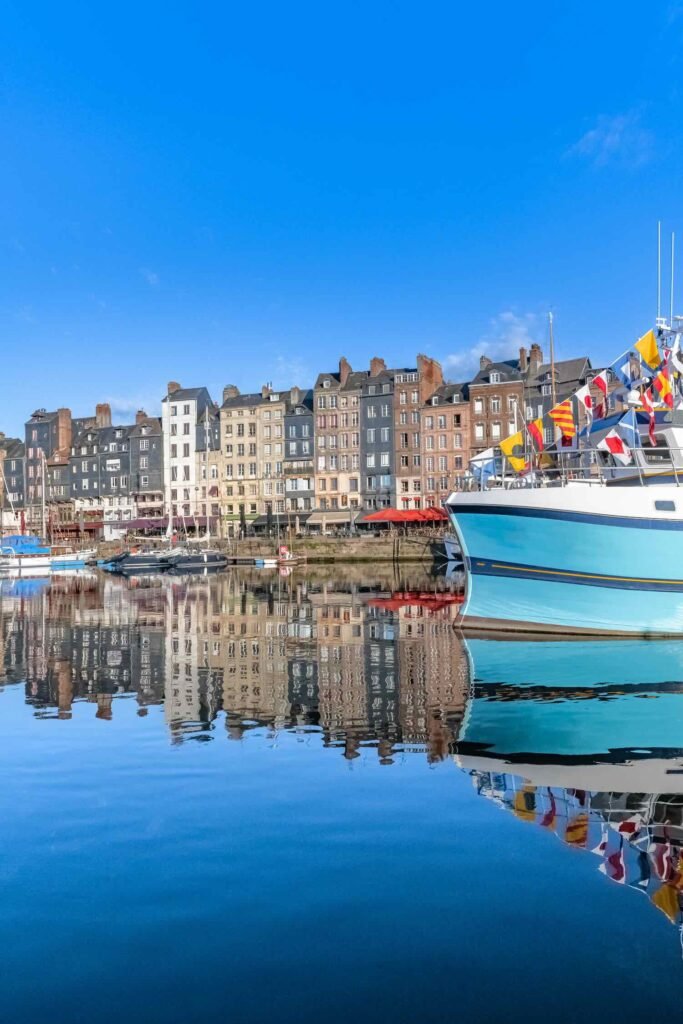
Honfleur is where most visitors fall for Normandy. It’s also, if you let it, where you base yourself to see the rest of it. La Petite Folie sits two minutes from the Vieux Bassin, but it’s just as well placed for the chalk cliffs of Étretat, the striking modern architecture of Le Havre, the beaches of June 1944, and the orchards of the Pays d’Auge — all within about an hour’s drive.

Over years of welcoming travellers, a few things keep coming up as the reasons our guests return — and recommend La Petite Folie to friends.
📍 A central address: 2 minutes from the Vieux Bassin, entirely on foot — no car, no shuttle, no parking stress
🏛️ Living heritage: a 19th-century house that has watched the town evolve — a piece of Honfleur’s story, inside your apartment
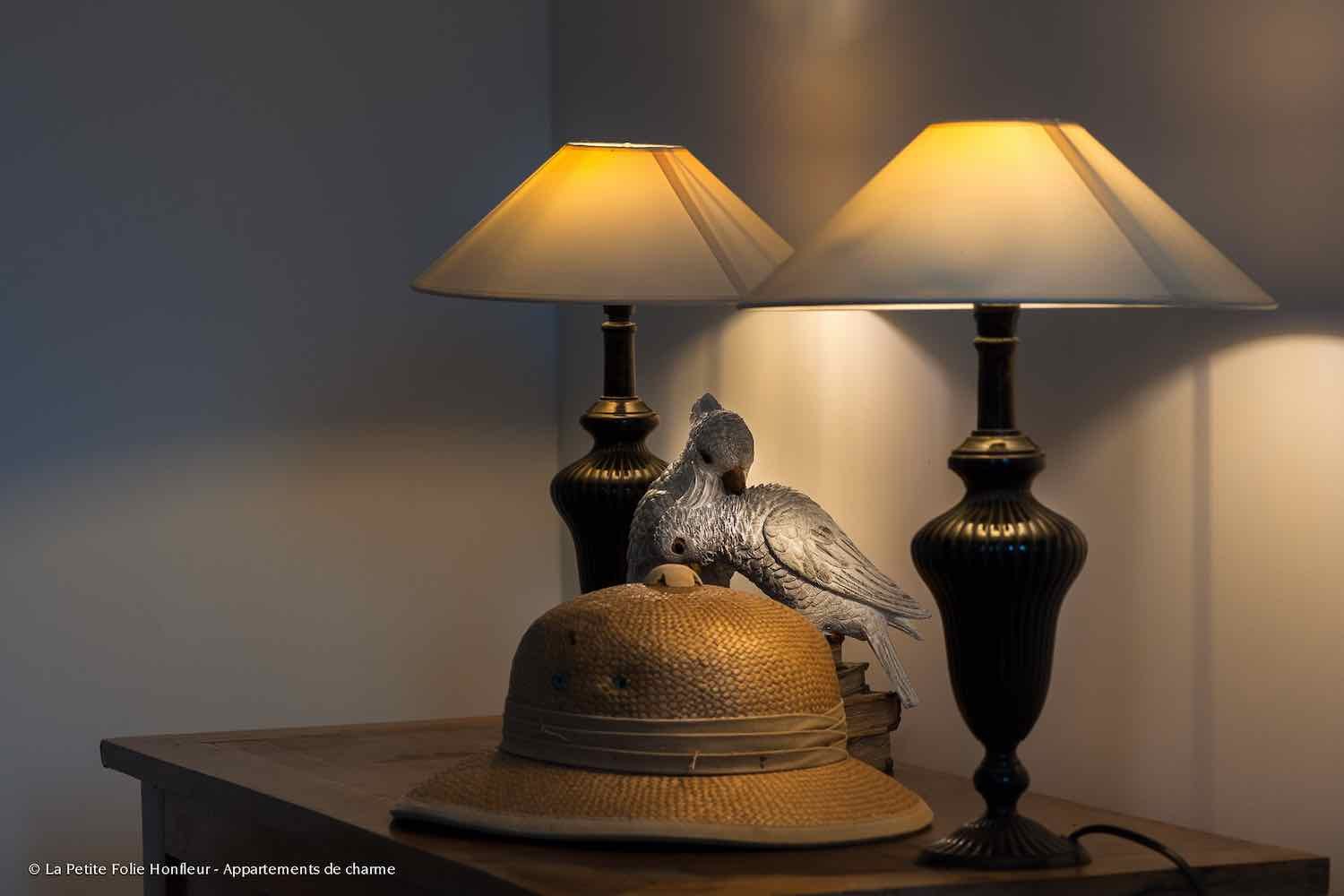
🎨 Designer interiors: every apartment is its own world, shaped by an interior designer — no standard rooms here
🍳 A private kitchenette: total freedom for breakfast, an evening drink or a light lunch, with no dependence on a restaurant
💑 Adults only: no young children, no groups — a genuinely calm, intimate atmosphere, guaranteed
🤝 A local welcome: Louise and Sukru actually live in Honfleur — their advice comes from locals, not brochures
🌿 Countryside calm in the town centre: thick stone walls and double glazing bring rural quiet into the historic core
🔑 Real flexibility: direct booking, personal correspondence — you’re never just a number in a system
A specific kind of trip has become a favourite among first-time visitors to France, especially from the US, the UK, Australia and increasingly China: land in Paris, spend a few days in the capital, then loop through Normandy before heading further west. A typical version runs 5 to 7 days: Paris, then Giverny, then Honfleur and the Pays d’Auge, then the D-Day beaches, often continuing on afterwards toward Mont Saint-Michel or the Loire Valley — though those are very much a separate leg of the journey, well beyond a day’s reach from Honfleur itself.
Honfleur sits almost exactly at the hinge of that route. Here’s what makes the detour worthwhile.
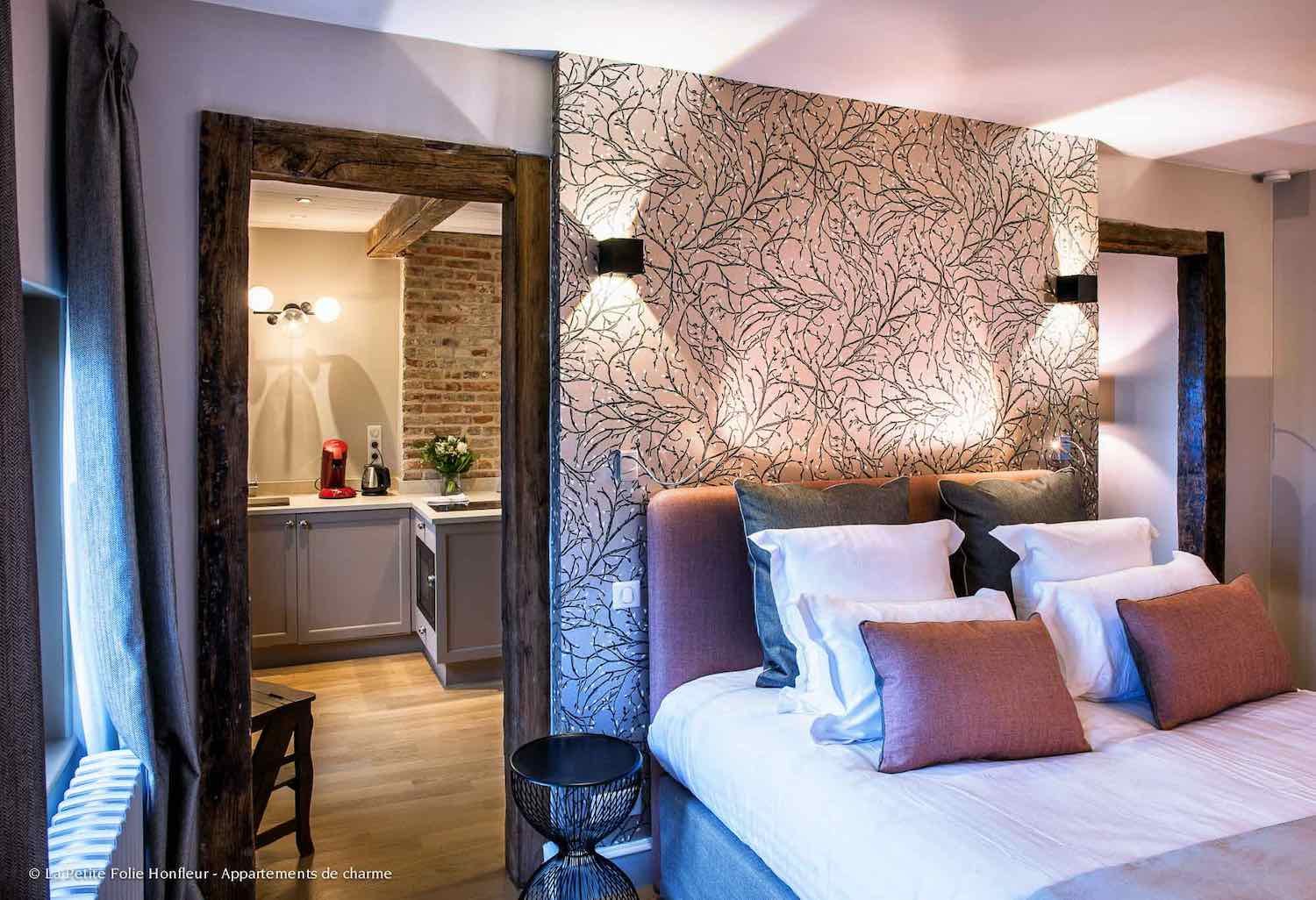
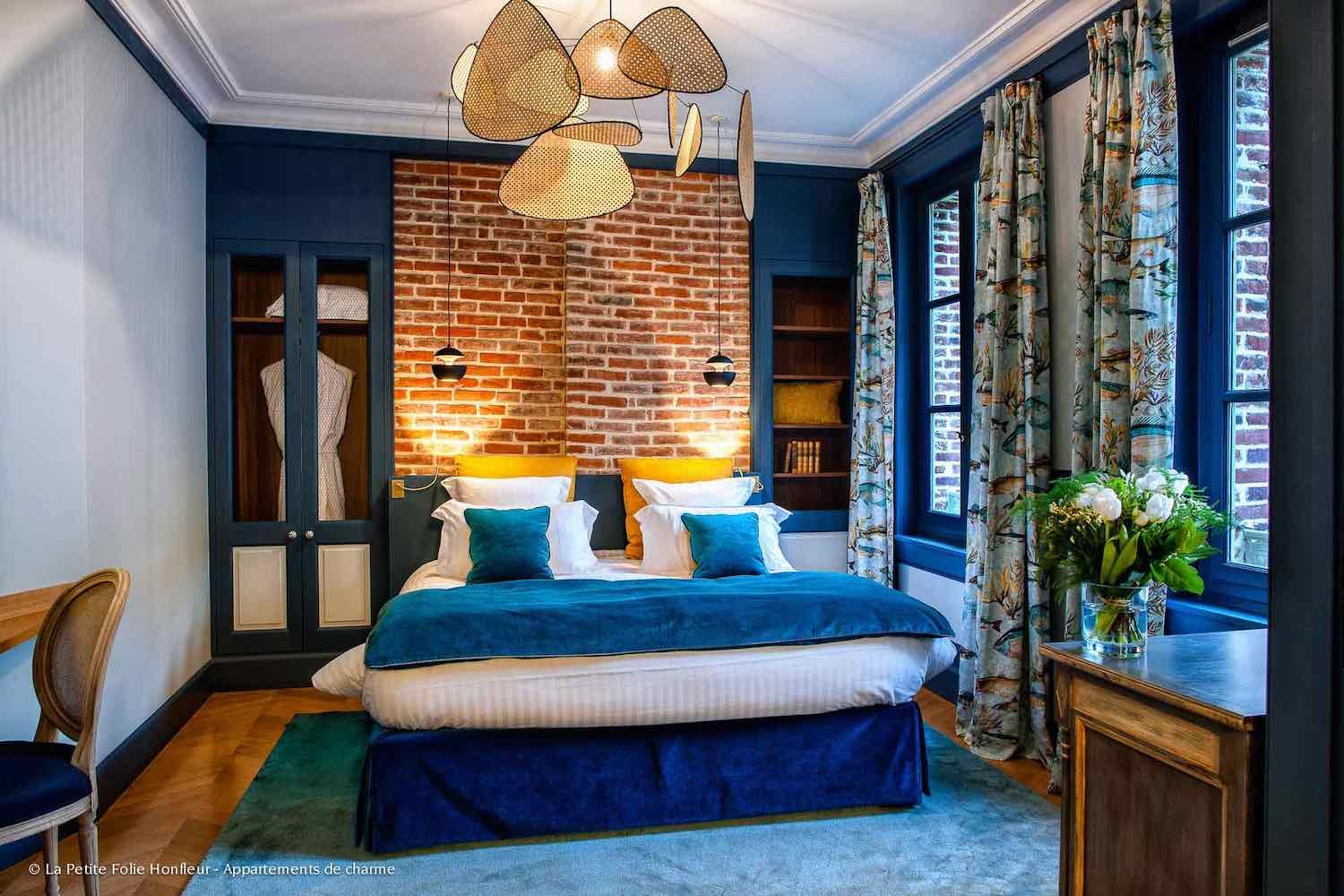
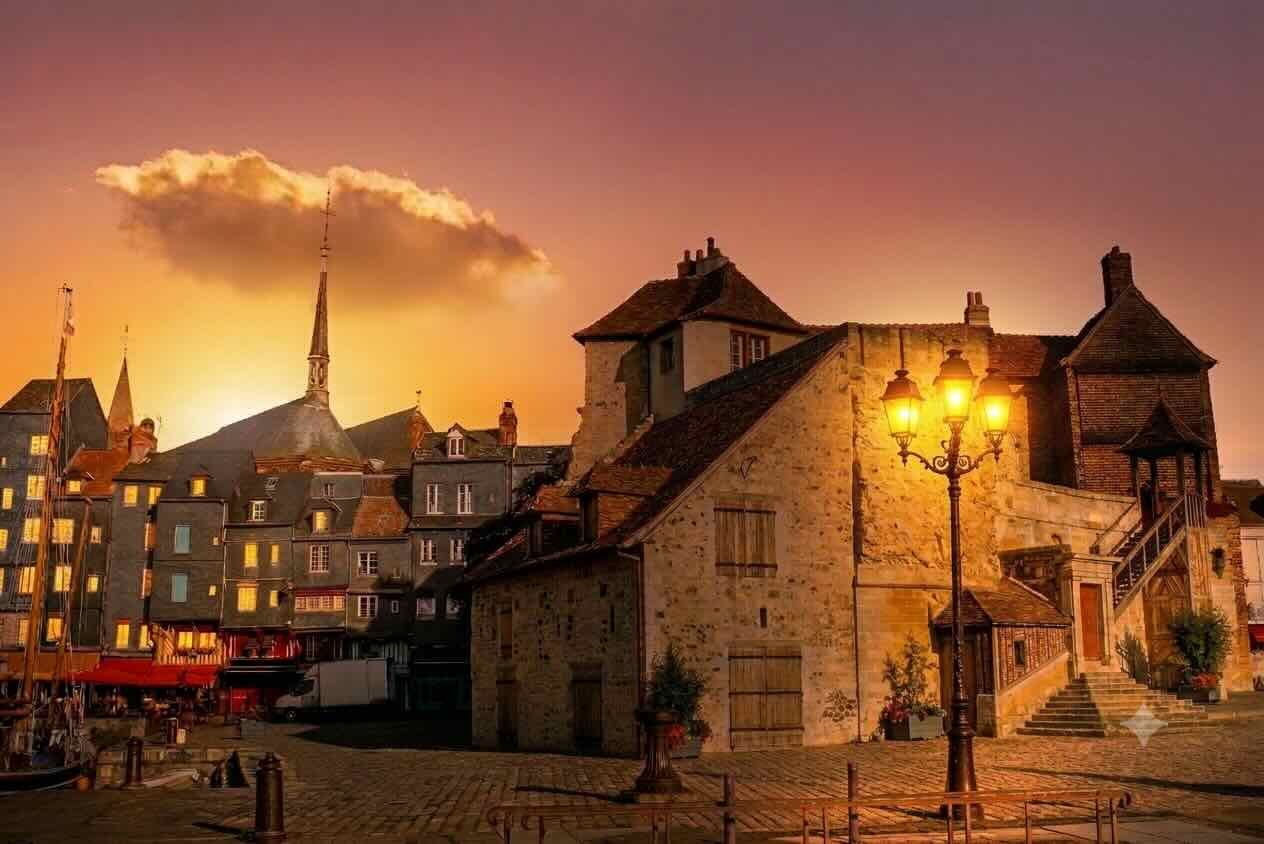
Roughly on the road between Paris and Honfleur, Giverny and Monet’s house and water-lily gardens make a natural first stop for art-minded travellers, and a fitting overture to the Impressionist thread that runs through Honfleur itself — the town where Boudin first drew Monet outdoors.
Étretat’s chalk cliffs and natural stone arches, some of the most photographed coastline in France, are about 45 minutes from Honfleur — an easy half-day trip, or a full day with lunch by the beach.
Rebuilt after the Second World War by architect Auguste Perret, Le Havre is a UNESCO World Heritage Site for its bold, coherent post-war concrete architecture — a deliberate, fascinating contrast to Honfleur’s half-timbered old town, just a short drive away across the Pont de Normandie.
Omaha Beach and the American Cemetery at Colleville-sur-Mer are roughly an hour to ninety minutes from Honfleur, a manageable and deeply meaningful day trip for many of our American and Canadian guests in particular.
Some travellers continue west from here toward Mont Saint-Michel or the châteaux of the Loire Valley — memorable destinations, but a genuinely separate stage of the journey, not a day trip from Honfleur.
Yes. Honfleur sits close to the Seine estuary crossing, which puts Étretat, Le Havre, the D-Day beaches and the Pays d’Auge all within about an hour’s drive, while Giverny lies on the natural route in from Paris. Many guests use La Petite Folie as a single comfortable base rather than changing hotels every night.
It’s a natural stop for travellers doing a 5-7 day Normandy loop from Paris: Giverny for Monet’s gardens, then Honfleur and the Pays d’Auge, then the D-Day beaches, often continuing further west afterwards toward Mont Saint-Michel or the Loire Valley, which are a separate leg beyond a day’s reach from Honfleur itself.
Very much so. Étretat’s chalk cliffs and natural arches, which inspired Monet and Courbet, are about 45 minutes from Honfleur, making it an easy half-day or full-day trip.
Le Havre, rebuilt after the Second World War by architect Auguste Perret, is a UNESCO World Heritage Site for its bold post-war concrete architecture — a striking contrast to Honfleur’s half-timbered old town, and only a short drive away across the Pont de Normandie.
Honfleur itself is entirely walkable, but a car is recommended for day trips to Étretat, Le Havre, the D-Day beaches or the Pays d’Auge villages, as public transport between these towns is limited.
Three to four nights lets you use La Petite Folie as a base for Honfleur itself plus day trips to Étretat, Le Havre, the D-Day beaches and the Pays d’Auge, without repacking every day.