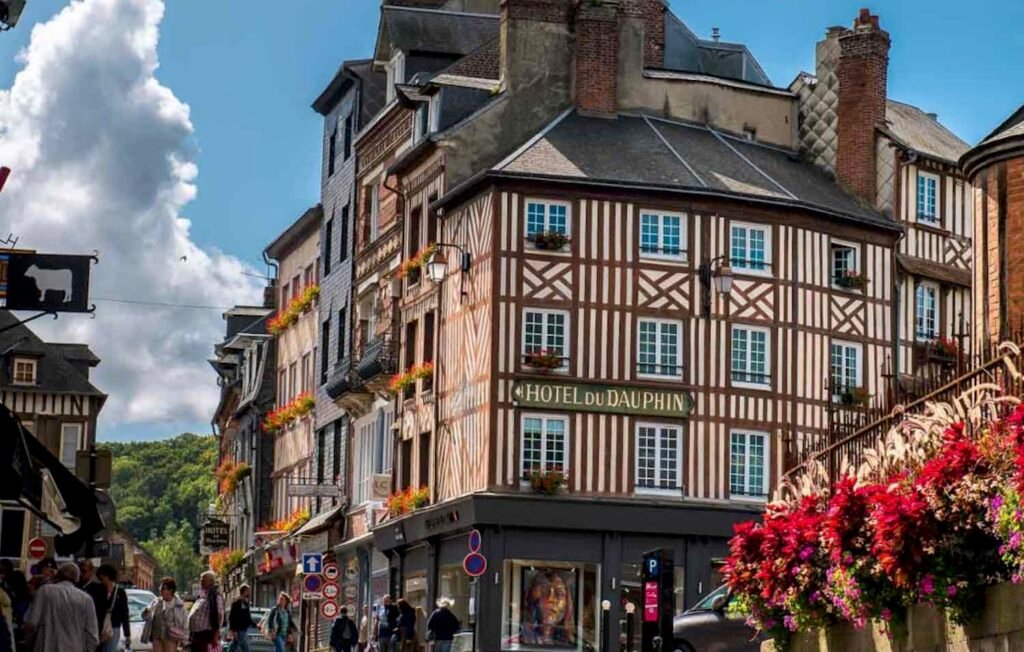




Everyone arrives for « the Vieux Bassin » and the tall houses they’ve already seen in a hundred photographs. Most people leave with something more: a forgotten side street, the evening light on the estuary, the memory of a meal, the quiet pull of a place that has inspired generations of artists.

This is La Petite Folie‘s own guide — not a generic listicle, but the honest picks of people who live in Honfleur and have welcomed travellers here for years. Every address below is within a 20-minute walk of our apartments.
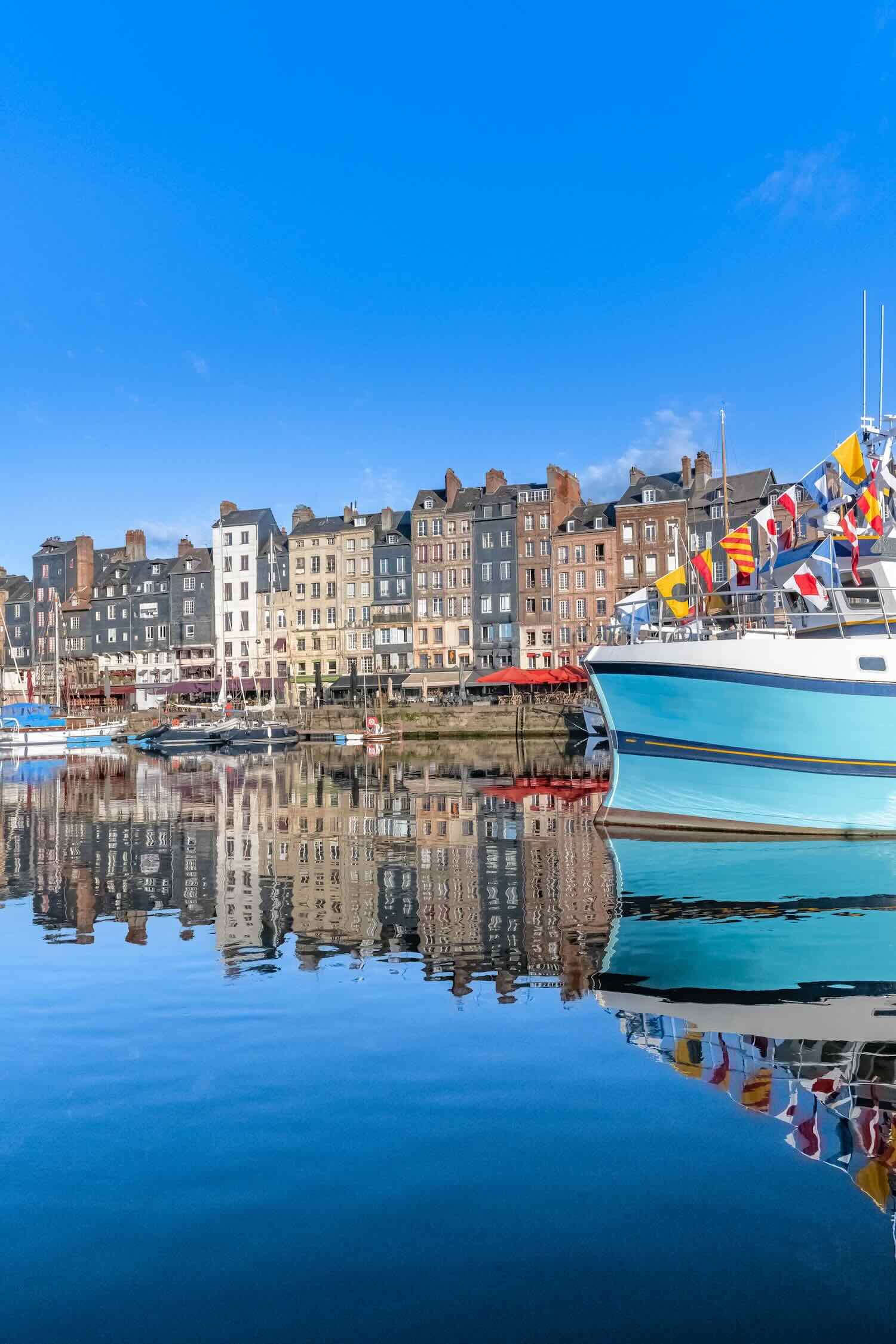
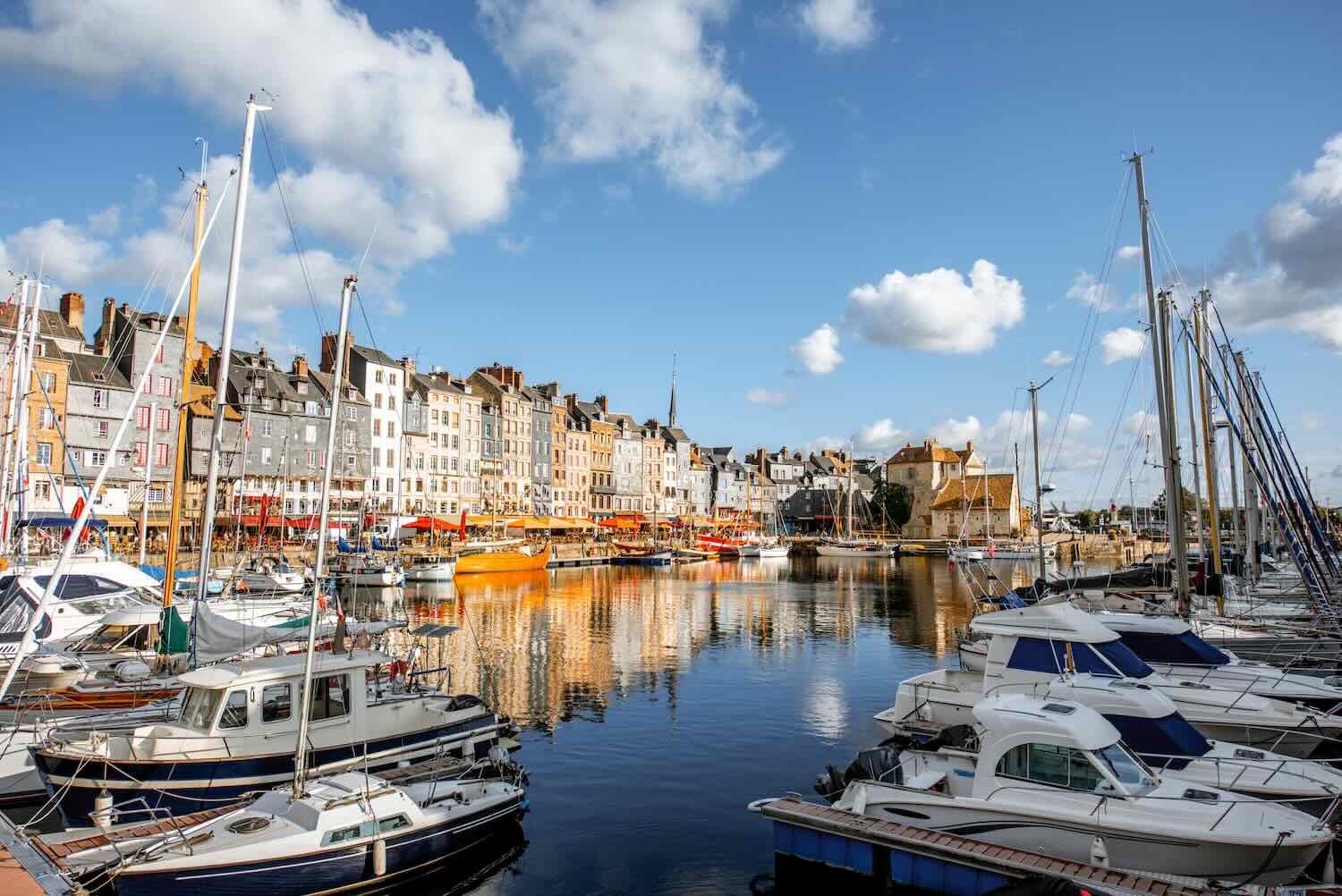
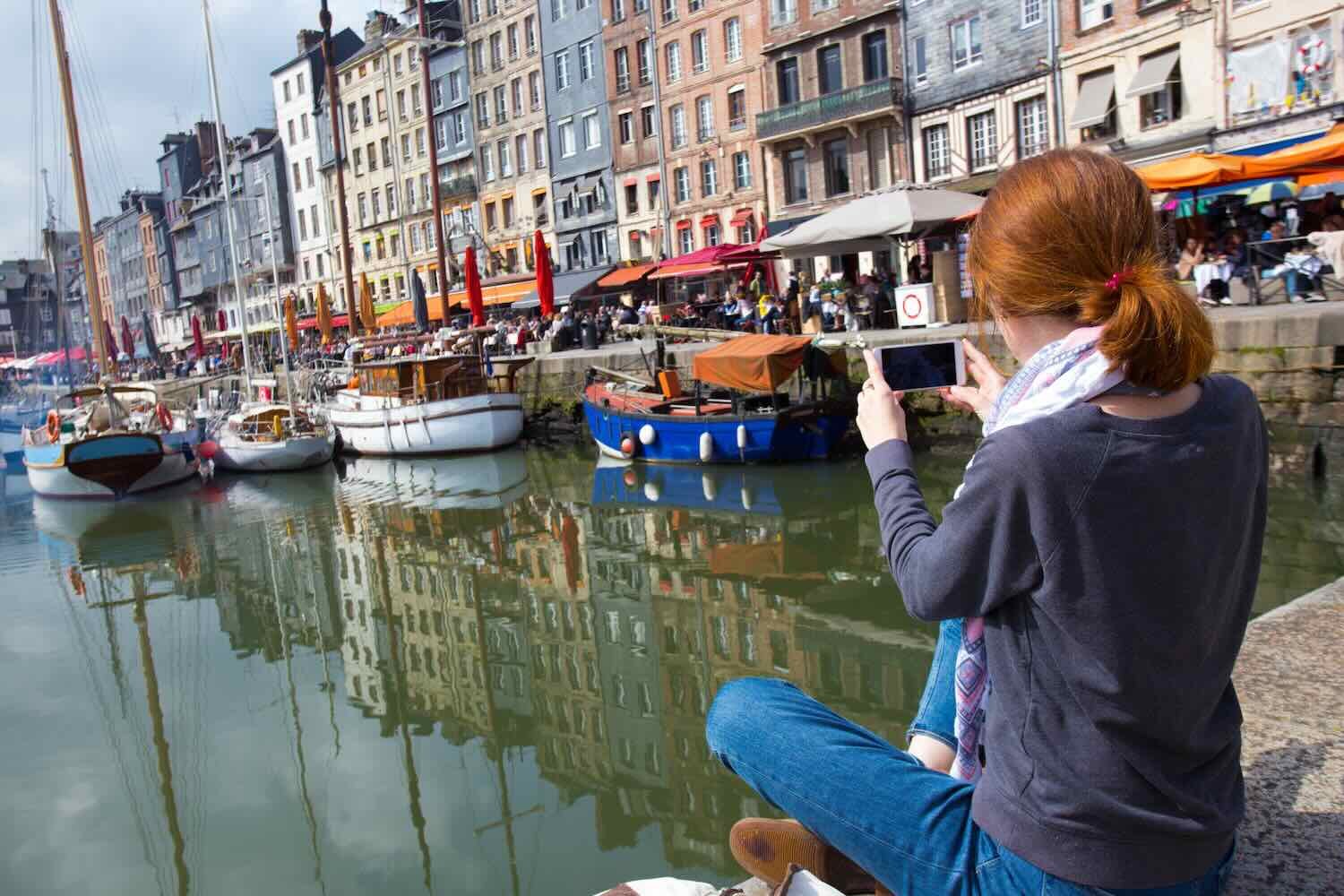
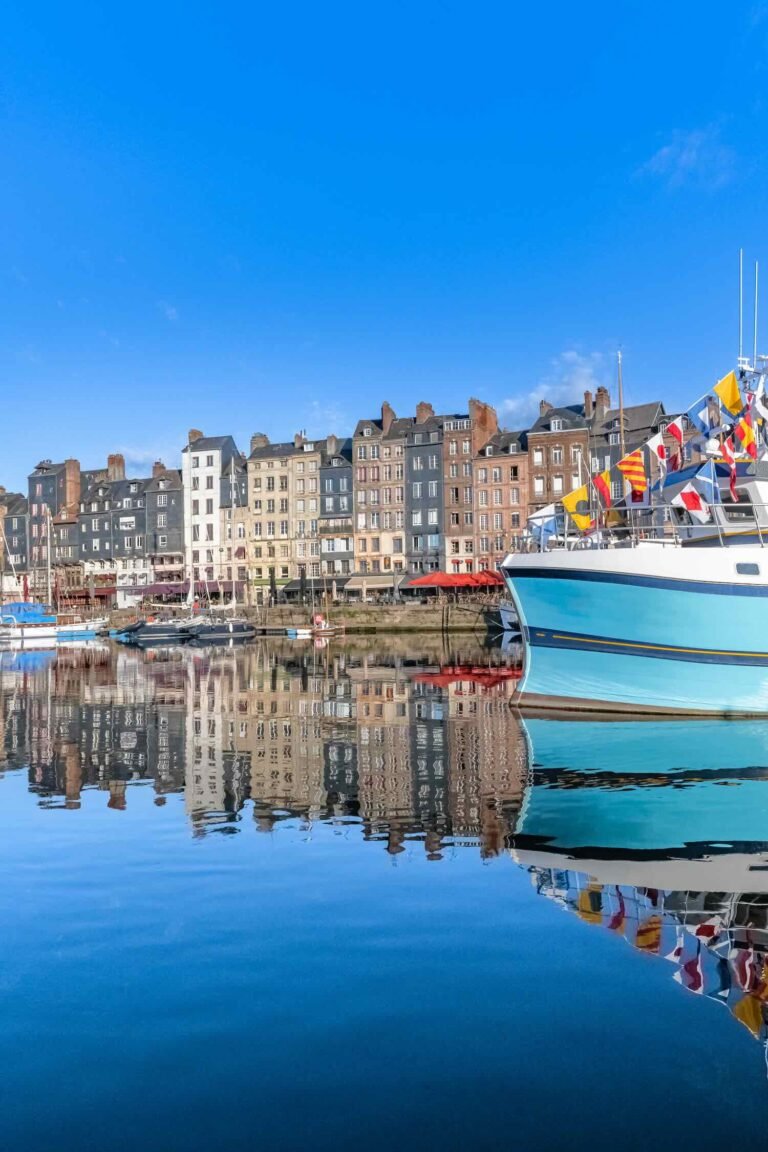
This is the image of Honfleur — tall, slate-fronted houses lined up around the harbour, mirrored in still water. It’s the view that obsessed the Impressionists for decades, and you’ll understand why the moment you stand there, whatever the hour.
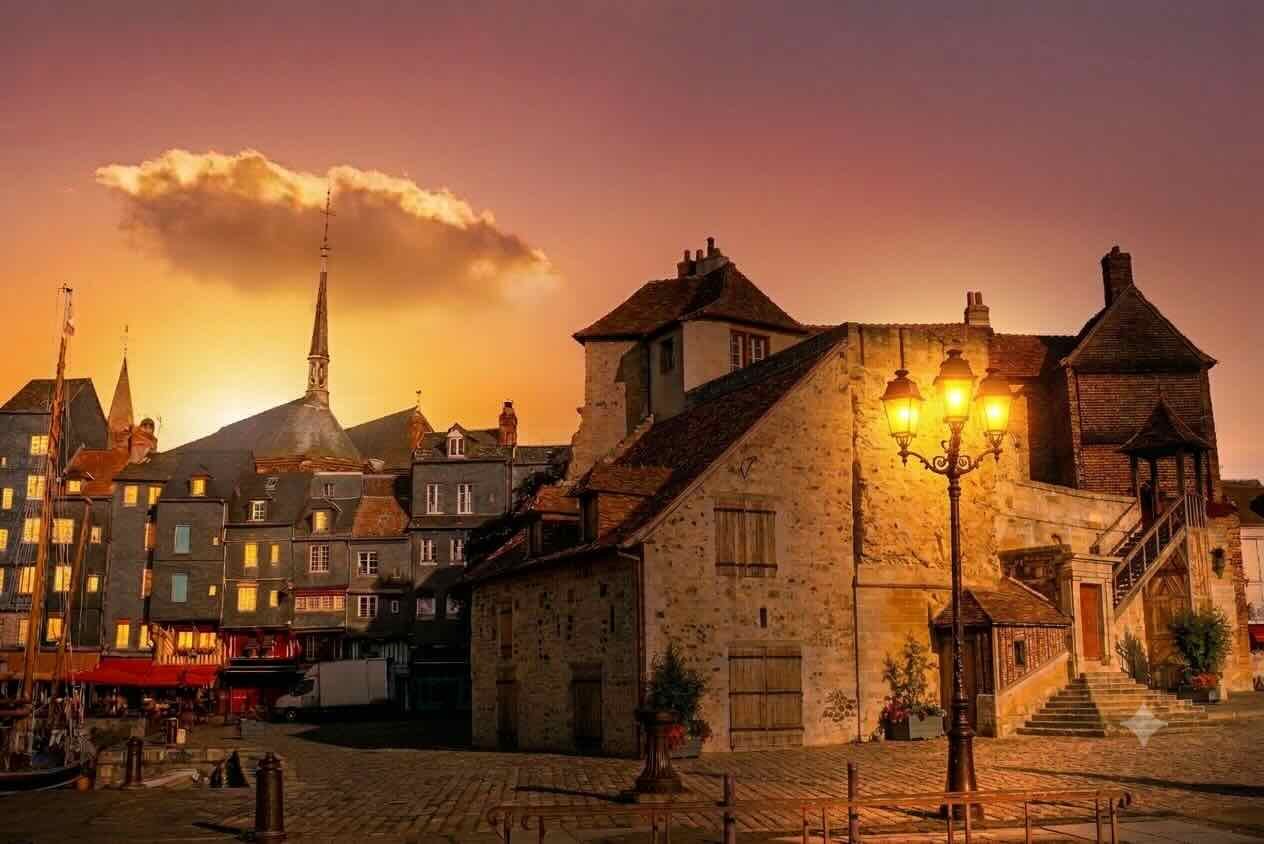
Our tip: avoid « the Vieux Bassin » between 11am and 5pm in summer, when it’s busiest. Go early (before 9am) for raking light and quiet streets, or late afternoon as the sun drops behind the west-facing façades. In the evening, the restaurants light up and the harbour takes on an entirely different mood.
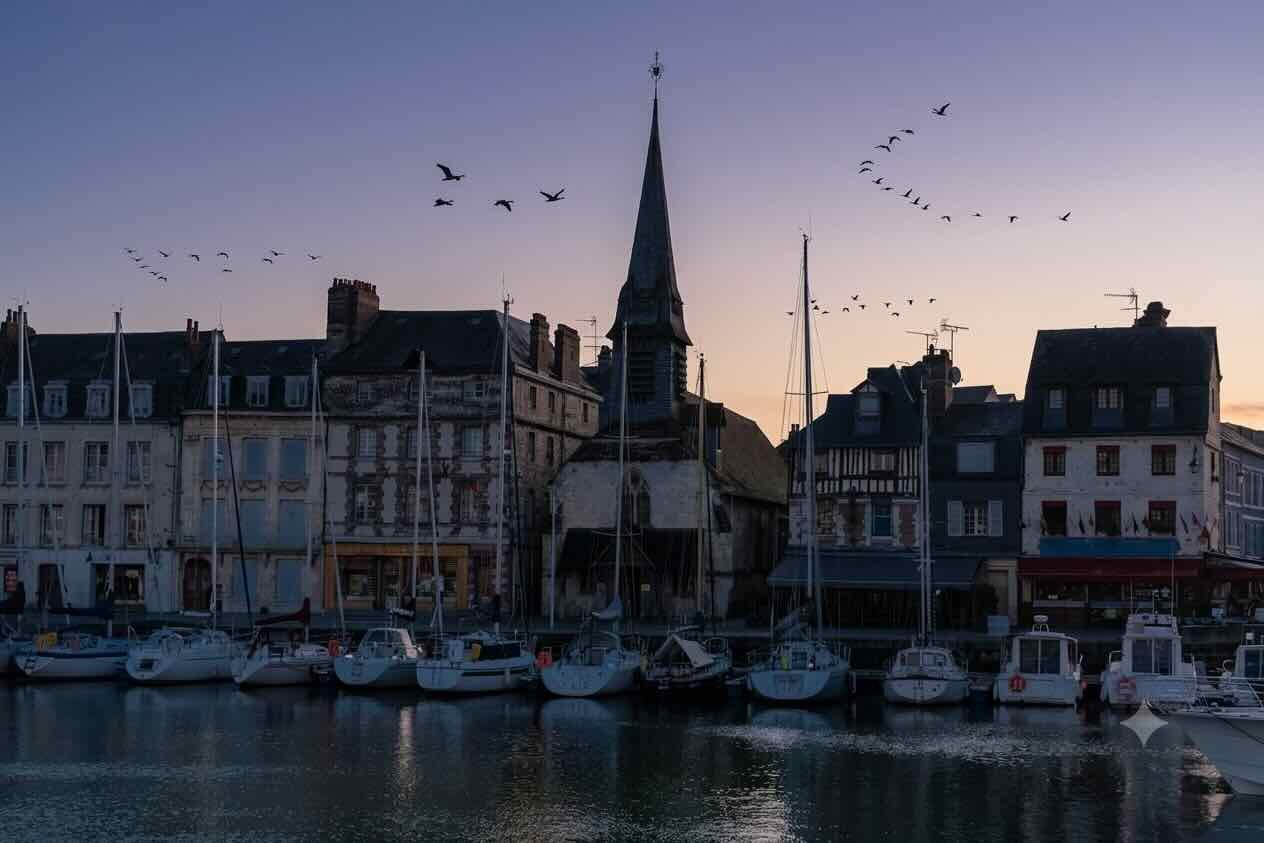
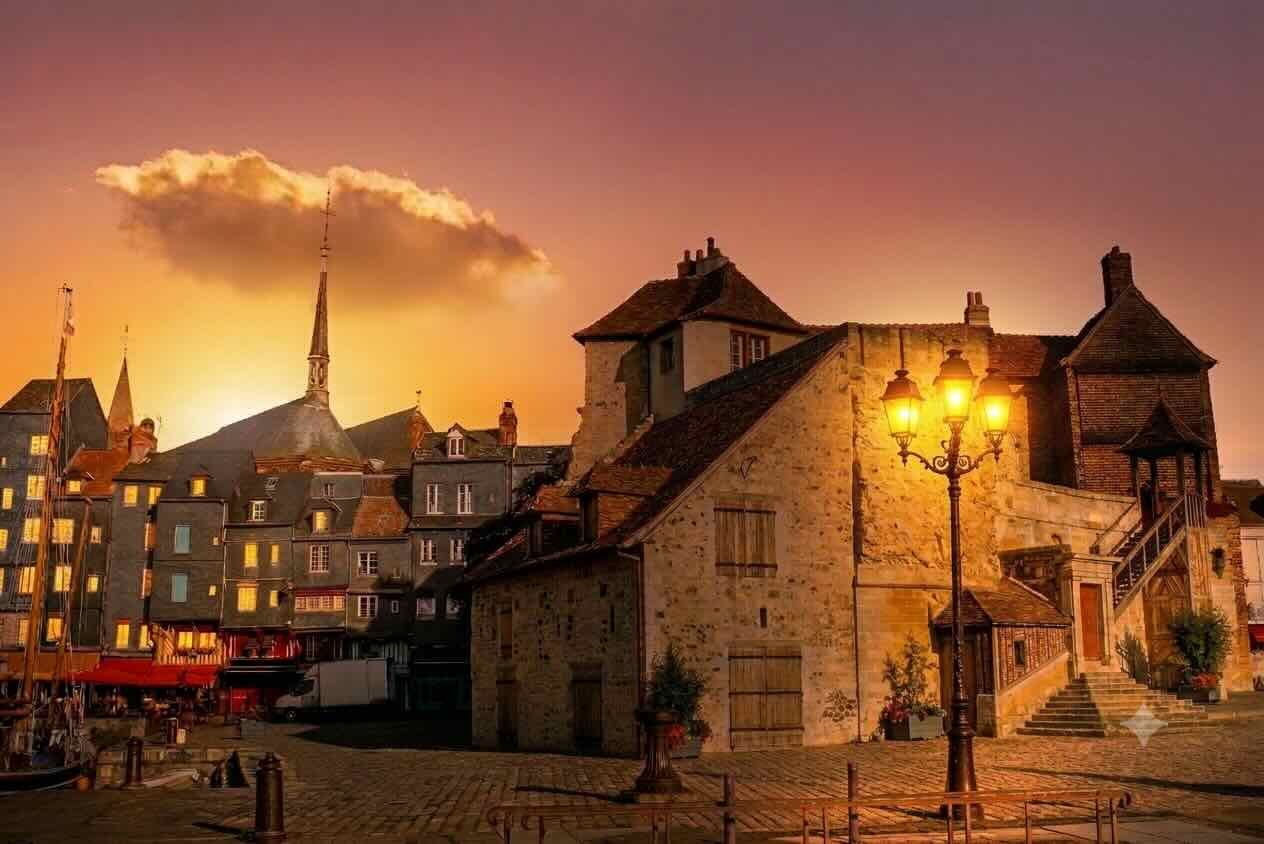
One of Normandy’s great architectural curiosities — France’s largest wooden church, built entirely by Honfleur’s own ship’s carpenters in the 15th century, with a bell tower standing separately across the square. Inside, the two naves, shaped like an upturned hull, are genuinely striking. The surrounding square hosts Honfleur’s Saturday morning market and is lively with café terraces year-round. Park for free at the Naturospace car park, 3 minutes away.
Eugène Boudin was born in Honfleur, and it was Boudin who first persuaded a young Claude Monet to paint outdoors on the Normandy coast — a moment that helped change the course of Western art. The museum bearing his name gathers his work alongside that of Monet, Courbet and Jongkind. Allow 1.5–2 hours. It’s a 5-minute walk from La Petite Folie.
Composer Erik Satie’s birthplace has become one of France’s most original small museums — no display cases, no wall text, just an immersive soundscape and a series of playful, unexpected installations true to Satie’s eccentric spirit. It’s literally 50 metres from La Petite Folie; you can sometimes hear his music drifting down Rue Haute.
A vast tropical greenhouse at the end of Boulevard Charles V, 3 minutes from La Petite Folie, where hundreds of exotic butterflies fly freely through lush vegetation. Disorienting and wonderful — especially good for a rainy day or an off-season visit.
Two immense 17th-century salt warehouses, built to store salt from the marshes of the Pays d’Auge, now host exhibitions, concerts and cultural events year-round. Their granite walls and soaring volume give them a remarkable atmosphere. Check the tourist office’s programme — it’s a 6-minute walk from La Petite Folie.
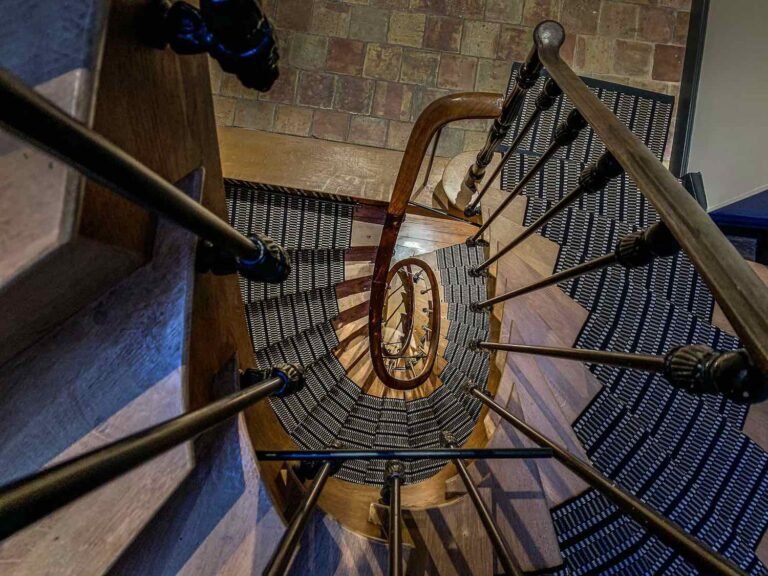
A foundational loop for a first visit. Start at La Petite Folie, 44 Rue Haute, and head toward Sainte-Catherine church and its lively square (20–25 min). Wind down through Rue de la Ville or Rue Brûlée toward the harbour, pausing at every side street and gallery window (15–20 min). Circle the full Vieux Bassin — galleries and restaurants on the Sainte-Catherine side, the Maritime Museum on the Saint-Étienne side (20–25 min). Follow the seafront to the Jardin des Personnalités, where busts of figures linked to Honfleur — Satie, Boudin, actor Michel Serrault — line the promenade (30–40 min). Loop back via Boulevard Charles V past the Naturospace and return down Rue Haute (20–25 min).
A more energetic walk up onto the hills above Honfleur, for one of Normandy’s most spectacular views. Climb Rue Haute north-west as the Côte de Grâce begins its gradual ascent. Reach the 17th-century Chapelle Notre-Dame-de-Grâce, a historic pilgrimage site with clear views over the rooftops (20–30 min). Continue to the Côte de Grâce viewpoint — Honfleur’s most spectacular panorama, taking in the Seine estuary, the Pont de Normandie, Le Havre across the water, and the whole town below (30–40 min). Optionally detour into the Bois du Breuil, a peaceful communal forest with marked trails (50 min). Descend back into the centre for a well-earned break on a café terrace (90 min).
Honfleur’s light is unusual — shifting, golden, never quite still, shaped by Norman clouds and the estuary’s reflections. That light drew Eugène Boudin from the 1850s onward, then Jongkind, Monet, Courbet, and an entire generation of painters who went on to reshape Western art.
It was on the beaches and cliffs near Honfleur that Boudin convinced the young Monet to paint en plein air — a founding moment for Impressionism. If the name Impressionism feels familiar, it’s no accident: the movement is a cornerstone of major American collections, from the Met to the Art Institute of Chicago, which means many of our guests arrive already knowing these paintings intimately, even before they’ve heard of Honfleur itself. Painters, amateur and professional, still set up their easels on the quays today, just as they did 170 years ago.
Claude Monet painted Honfleur and its surroundings repeatedly. The Seine estuary, the cliffs, and the beach at Sainte-Adresse are all within an hour’s drive. Deauville and Trouville, painted by both Boudin and Monet, are 20 minutes away. Our own Claude Monet apartment, on the first floor of La Petite Folie, is decorated as a quiet homage to that legacy — light, space, soft tones.
Honfleur’s connection to North America runs deeper than most visitors expect, and it’s worth two detours of your own.
Honfleur was the home port of navigator Samuel de Champlain, who set sail from here in 1608 on the voyage that led to the founding of Quebec City. For Canadian and American guests, it isn’t a footnote — it’s a genuine thread back to their own history. It’s also why one of our apartments carries his name.
For many American visitors, Normandy isn’t only picturesque — it’s personal. Omaha Beach and the American Cemetery at Colleville-sur-Mer are roughly an hour to ninety minutes from Honfleur, making them a genuinely manageable day trip rather than a separate expedition.
Deauville's famous boardwalk (Les Planches), its casino, Belle Époque seafront architecture, designer boutiques, and Trouville's permanent fish market make for an easy half-day. Deauville also hosts the American Film Festival each September, a detail many of our American guests enjoy discovering. Our tip: take the coast road from Plage du Butin for sweeping views over the Baie de Seine toward Le Havre.
The dramatic chalk cliffs and natural arches that inspired Monet and Courbet.
One of France's most photogenic half-timbered villages, and a good introduction to the Pays d'Auge's cider country — the region's answer to wine country, all orchards and calvados rather than vineyards.
A tranquil medieval village built around a working abbey, often named among France's most beautiful.
Two days is a comfortable minimum to see the Vieux Bassin, Sainte-Catherine church, the museums and a walk up to the Côte de Grâce. With three days you can add a day trip to Deauville or the Pays d’Auge. A week lets you use Honfleur as a base to explore the whole Côte Fleurie.
Honfleur was the home port of navigator Samuel de Champlain, who set sail from here in 1608 on the voyage that led to the founding of Quebec City. The link runs deep in the town’s identity, and one of our own apartments is named in his honour.
The D-Day beaches and the American Cemetery at Colleville-sur-Mer are roughly an hour to ninety minutes from Honfleur by car, making them an easy and popular day trip, especially for American and Canadian visitors.
Honfleur itself is entirely walkable from La Petite Folie. A car becomes useful for day trips to places like Étretat, Beuvron-en-Auge or the D-Day beaches, since public transport outside the town is limited.
Very much so. Autumn brings the golden, low light that first drew the Impressionist painters here, with smaller crowds. Winter offers a quieter, more intimate town, and spring brings blossom to the orchards of the Pays d’Auge. Many regular visitors prefer September or October.
The Naturospace car park, at the end of Boulevard Charles V, is free and about 3 minutes’ walk from La Petite Folie and 8 minutes from the Vieux Bassin. The paid VINCI car park is opposite the tourist office. Driving into the historic centre itself is best avoided, as Rue Haute is one-way and narrow.